- PRODUCTS
- Pexels Phones
- Google Pixel 8 Price in Nigeria
Google Pixel 8 Price in Nigeria

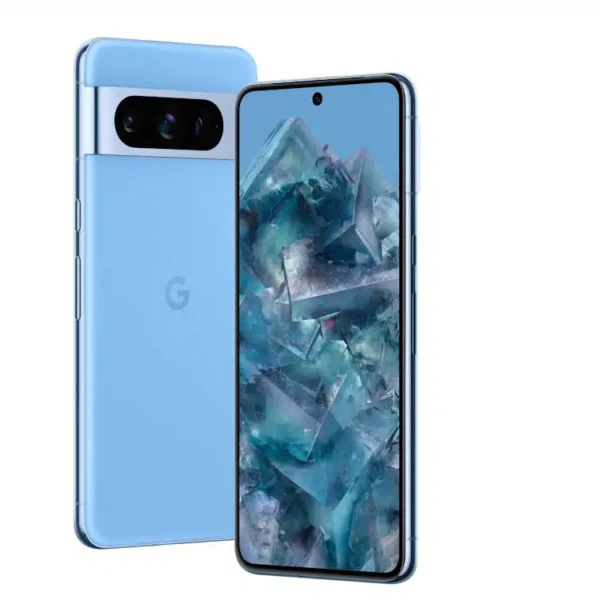

-
DISPLAY: 6.7 inches, 108.7 cm2 (~87.4% screen-to-body ratio)
-
CAMERA: 50 MP (12 MP eff.),
-
BATTERY: Li-Ion 4575 mAh
-
OS: Android 14, upgradable to Android 16, up to 7 major Android upgrades
-
CHIPSET: Google Tensor G3 (4 nm)
-
RAM: 128GB 8GB RAM, 256GB 8GB RAM
-
SIM: Nano-SIM + eSIM
The Google Pixel 8 Price in Nigeria and Slot is 410,000 Naira, and this includes Lagos, Abuja, Kano, Rivers, Ogun, Oyo, Delta, Kaduna, Edo, Enugu, Port Harcourt, Ibadan, Benin, Owerri, and Warri.
The Google Pixel 8 is one of those phones that quietly ages well. Even though it launched in 2023, it still holds its ground in 2026 because Google focuses less on raw specs and more on software, cameras, and long-term support.
In Nigeria’s smartphone market, where Tecno, Infinix, Samsung Galaxy A-series, and Redmi dominate the mid-range space, the Pixel 8 stands out for one simple reason — it feels like a “mini flagship” with a premium camera system and clean Android experience.
But with newer Pixel models already out, the real question is simple:
Is the Google Pixel 8 still worth buying in Nigeria in 2026, or is it outdated?
Let’s break it down properly.
Google Pixel 8 Price in Nigeria (2026)
The Google Pixel 8 price in Nigeria currently falls within:
- ₦350,000 — ₦850,000
Pricing depends on:
- Storage variant (128GB or 256GB)
- Dollar exchange rate
- Import source
- Device condition (new, UK-used, US-used)
- Seller location
Since Google doesn’t officially sell Pixel phones in Nigeria, availability is mostly through importers in Lagos and online tech stores.
At this price, it sits between upper mid-range phones and entry-level flagships.
Design and Build Quality
The Pixel 8 is compact, clean, and easy to handle.
Unlike many modern smartphones that are getting bigger and heavier, the Pixel 8 stays in the “comfortable phone” category. At 6.2 inches, it fits easily in one hand, which is something many users in Nigeria actually prefer for daily use.
The aluminum frame gives it a premium feel, while the glass front and back add a flagship touch. The camera bar design also makes it instantly recognizable.
It doesn’t try to look flashy — instead, it focuses on simplicity and durability.
IP68 rating also means it can survive dust and accidental water exposure, which is useful in everyday Nigerian environments.
Display Experience
The 6.2-inch OLED display is one of the most balanced panels in this price range.
It is:
- Sharp enough for text and videos
- Smooth at 120Hz
- Bright enough for outdoor use
Scrolling through apps feels fluid, and colors are well-tuned without being overly saturated.
Watching content on YouTube, Netflix, or TikTok feels premium despite the phone not being a large device.
This is not a “show-off display” — it’s a practical, well-optimized one.
Real-World Performance Review
The Tensor G3 chipset inside the Pixel 8 is not built to win benchmark wars, but in real usage, it performs steadily.
Everyday usage feels smooth:
- Banking apps
- Chrome browsing
- YouTube streaming
Everything runs without lag in normal conditions.
Google optimizes the software heavily, so the phone feels more responsive than raw numbers suggest.
Gaming Performance
This is where expectations should be realistic.
Games like:
- PUBG Mobile
- Call of Duty Mobile
- Asphalt 9
run well on medium to high settings.
However, this is not a gaming-focused device.
Long gaming sessions can lead to heating, especially under Nigerian weather conditions or while using mobile data.
So it is fine for casual gaming, not hardcore gaming.
Camera Performance — Still a Strong Selling Point
The Pixel 8 continues Google’s reputation for excellent smartphone photography.
Main Camera
The 50MP main sensor produces:
- Sharp images
- Accurate skin tones
- Strong dynamic range
- Natural color processing
Photos don’t look overly edited — they look real.
This is one reason many people still choose Pixel phones over competitors.
Ultrawide Camera
The 12MP ultrawide performs well for:
- Group photos
- Landscapes
- Street shots
It maintains decent color consistency with the main camera.
Low-Light Photography
Night photography is where the Pixel 8 shines.
Even in dim environments, images remain:
- Bright
- Clear
- Balanced
Noise levels are well controlled.
Selfies
The 10.5MP selfie camera delivers clean results, especially for social media use.
Video Recording
Video quality is solid with:
- 4K support
- Good stabilization
- Reliable HDR handling
Great for content creators and casual vloggers.
Battery Life and Charging
Battery performance is reliable but not class-leading.
The 4575mAh battery can comfortably last a full day with:
- Social media usage
- Messaging
- Streaming
- Light gaming
Heavy users may need to top up before the day ends.
Charging Speed
Charging is decent:
- 27W wired charging
- 18W wireless charging
It is not as fast as many Chinese phones, but it is consistent and safe for battery health.
Software Experience — The Real Pixel Advantage
This is where the Pixel 8 stands out strongly.
You get:
- Clean Android interface
- No bloatware
- Fast updates
- Smooth animations
- Strong Google AI features
Google also promises up to 7 years of software updates, which is rare in this price category.
That means this phone can still receive updates for many years, making it a long-term device.
Pros and Cons of Google Pixel 8
Pros
- Excellent camera performance
- Compact and easy to use
- Clean Android experience
- Long software support
- Premium build quality
- Strong low-light photography
- Smooth daily performance
Cons
- Average gaming performance
- Heating under heavy load
- Slower charging compared to rivals
- No expandable storage
- Limited official support in Nigeria
Google Pixel 8 vs Pixel 8a
The Pixel 8 offers:
- Better build quality
- Stronger cameras
- More premium feel
The Pixel 8a offers:
- Cheaper price
- Similar software experience
- Slightly newer support cycle
If budget is tight, 8a makes sense. If you want premium feel, Pixel 8 wins.
Google Pixel 8 vs Samsung Galaxy A55
Samsung Galaxy A55 offers:
- Better battery optimization
- Expandable storage
- Stronger local support
Pixel 8 offers:
- Better camera quality
- Cleaner software
- Faster Android updates
If camera matters more, Pixel 8 is better.
Who Should Buy Google Pixel 8?
This phone is ideal for:
- Photography lovers
- Students and professionals
- Social media users
- People who want compact phones
- Users who prefer clean Android
Who Should Avoid It?
Avoid it if you:
- Are a heavy gamer
- Want ultra-fast charging
- Need expandable storage
- Prefer large display phones
Frequently Asked Questions (FAQ)
Is Google Pixel 8 good for gaming?
Yes for casual gaming, but not ideal for heavy gaming.
Does Pixel 8 support 5G in Nigeria?
Yes, it supports 5G networks.
Is Google Pixel 8 waterproof?
Yes, it has IP68 water resistance.
How long will Pixel 8 get updates?
Up to 7 years of Android and security updates.
Is Pixel 8 still worth it in 2026?
Yes, especially for camera quality and clean software experience.
Final Verdict
The Google Pixel 8 is still a strong smartphone in 2026, especially for users who care more about real-life experience than specs on paper.
It delivers:
- Reliable performance
- One of the best camera systems in its class
- Clean and long-supported Android software
- Compact, premium design
It is not perfect — gaming and charging speed are average — but it still offers strong overall value.
If your priority is camera quality, smooth software, and long-term usability, the Pixel 8 remains a very smart buy in Nigeria.
Specs
NETWORK
| Technology | GSM / HSPA / LTE / 5G |
LAUNCH
| Release Date | 2023, October 04 |
| Status | Available. Released 2023, October 12 |
BODY
| Dimensions | 150.5 x 70.8 x 8.9 mm (5.93 x 2.79 x 0.35 in) |
| Weight | 187 g (6.60 oz) |
| Build | Glass front (Gorilla Glass Victus), glass back (Gorilla Glass Victus), aluminum frame |
| SIM | Nano-SIM + eSIM IP68 dust tight and water resistant (immersible up to 1.5m for 30 min) |
DISPLAY
| Type | OLED, 120Hz, HDR10+, 1400 nits (HBM), 2000 nits (peak) |
| Size | 6.2 inches, 91.1 cm2 (~85.5% screen-to-body ratio) |
| Resolution | 1080 x 2400 pixels, 20:9 ratio (~428 ppi density) |
| Protection | Corning Gorilla Glass Victus |
PLATFORM
| OS | Android 14, upgradable to Android 16, up to 7 major Android upgrades |
| Chipset | Google Tensor G3 (4 nm) |
| CPU | Nona-core (1x2.91 GHz Cortex-X3 & 4x2.37 GHz Cortex-A715 & 4x1.70 GHz Cortex-A510) |
| GPU | Mali-G715 MC7 |
MEMORY
| Card slot | No |
| Internal | 128GB 8GB RAM, 256GB 8GB RAM |
MAIN CAMERA
| Back | 50 MP (12 MP eff.), f/1.7, 25mm (wide), 1/1.31", 1.2µm, dual pixel PDAF, OIS 12 MP, f/2.2, 126˚ (ultrawide), 1/2.9", 1.25µm, AF |
| Features | Laser AF, Dual-LED flash, Pixel Shift, Ultra HDR, panorama, Best Take |
| Video | 4K@24/30/60fps, 1080p@30/60/120/240fps; gyro-EIS, OIS, 10-bit HDR |
SELFIE CAMERA
| Front | 10.5 MP, f/2.2, 20mm (ultrawide), 1/3.1", 1.22µm |
| Features | HDR, panorama |
| Video | 4K@24/30/60fps, 1080p@30/60fps |
SOUND
| Loudspeaker | Yes, with stereo speakers |
| 3.5mm jack | No |
COMMS
| WLAN | Wi-Fi 802.11 a/b/g/n/ac/6e/7, tri-band, Wi-Fi Direct |
| Bluetooth | 5.3, A2DP, LE, aptX HD |
| Positioning | GPS (L1+L5), GLONASS (G1), GALILEO (E1+E5a), QZSS (L1+L5) |
| NFC | Yes |
| Radio | No |
| USB | USB Type-C 3.2 |
FEATURES
| Sensors | Fingerprint (under display, optical), accelerometer, gyro, proximity, compass, barometer |
BATTERY
| Type | Li-Ion 4575 mAh |
| Charging | 27W wired, PD3.0, PPS, 50% in 30 min 18W wireless Reverse wireless Bypass charging |
MISC
| Models | GKWS6, G9BQD, GA04851-US, GZPFO, GPJ41 |
| Colors | Obsidian, Hazel, Rose, Mint |
Reviews
Disclaimer Note
Disclaimer: We don't guarantee that the information on our page is 100% correct.


